
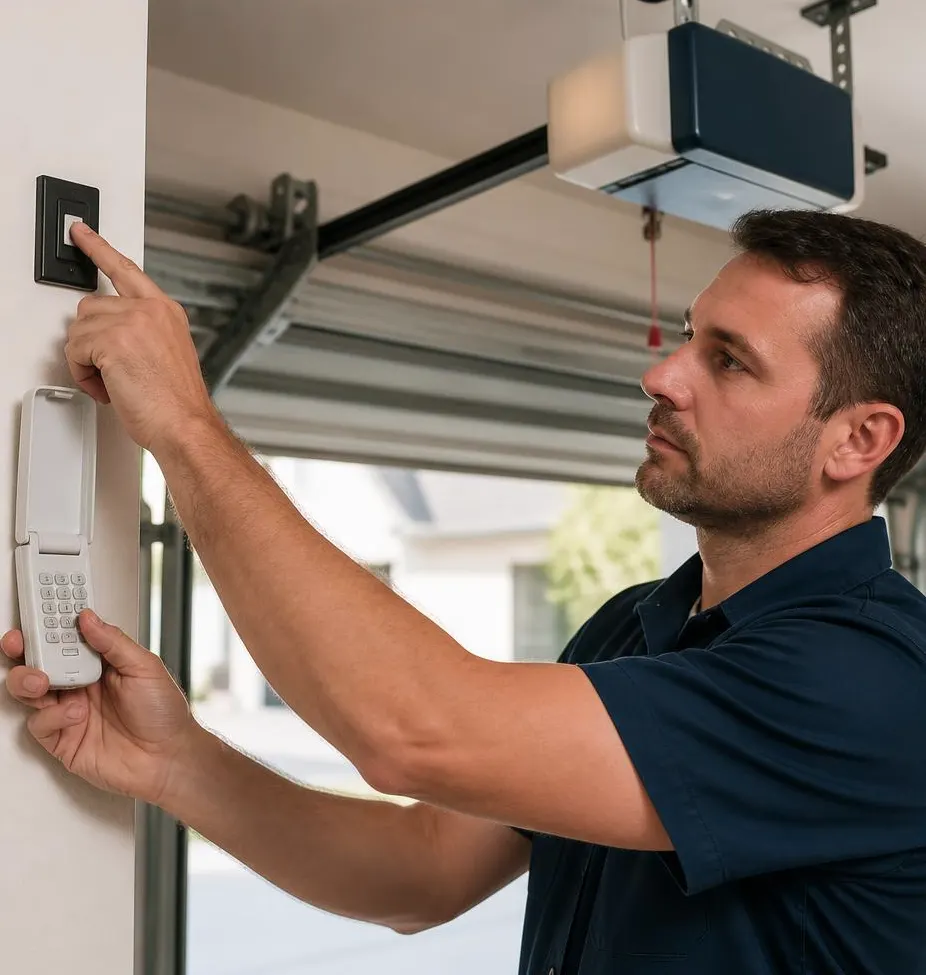
The Moment You Reach for the Red Cord
The power’s been out since the last line of storms rolled through, the opener is dead, and you need the car out before the next downpour hits. You’re standing under the door looking at that red cord hanging from the track, and for a second you hesitate — pull it, and will the door just drop on you?
That hesitation is the right instinct. The emergency release cord is one of the most useful safety features on a garage door, and also one of the easiest to misuse if you don’t know what it actually does.
What the Cord Is Actually For
The cord disconnects the trolley from the opener's drive chain or belt. Once it's pulled, the door is no longer attached to the motor at all — it's running purely on its springs and your own muscle. This lets you raise or lower the door by hand, which matters most during:
- Power outages, which happen often enough here once hurricane season gets going
- A dead or malfunctioning opener that won't respond to the remote or wall button
- A door that's stuck partway and needs to be moved manually to check the problem
In any of those cases, pulling the cord is exactly what it's designed for. The door should lift and lower with moderate, even effort — the springs do most of the work, not your arms.
Where It Goes Wrong
The danger isn't in the cord itself, it's in what the door does the instant it's disconnected. Picture two situations:
- A broken or weakened spring. Springs are what hold the door's weight — a garage door isn't light, and a wound-down or snapped spring means nothing is counterbalancing it anymore. Pull the cord in that state and the door can drop fast, hard, and without warning. That's a crushed hand, a smashed car hood, or a cracked slab under it.
- The door in motion or under tension. If the opener is straining — grinding, stuttering, or stopping partway — and you pull the cord mid-cycle, you're releasing a door that may already be fighting an off-track roller or a bent track. It can swing, jump the track further, or fall unevenly.
Both situations share a warning sign: effort. If the door feels heavy, uneven, or like it wants to slam down the second you touch the cord, stop. That's not a power problem, that's a spring or track problem, and manual operation at that point is a hazard, not a workaround.
A Quick Read Before You Pull
- Is the door fully closed and sitting still? Good sign.
- Does it look level, or is one side sagging lower than the other? Sagging usually means a spring issue.
- Did you hear a loud bang at some point recently — a pop or snap? That's often a spring breaking, even if the door still looked fine afterward.
- Has the opener been straining or reversing on its own lately? That's the motor compensating for something it shouldn't have to.
If any of those raise a flag, don't pull the cord expecting a smooth lift. Support the door first if you must move it — have a second person ready, and never put hands or fingers near the bottom panel or the tracks.
The Florida Factor
Humidity and afternoon swelling can make wood-framed doors stick in their tracks even when nothing is mechanically wrong, which sometimes gets mistaken for a spring problem. On the flip side, salt air drifting inland from the coast speeds up rust on cables, pulleys, and the release mechanism itself — a corroded cord or a seized trolley can snap or jam right when you need it most, usually mid-storm with the power already out. A quick seasonal check of the release assembly, before hurricane season peaks, saves you from finding out it's frozen up at the worst possible time.
When to Call Interlachen Garage Door Pro
If the door felt heavy or dropped unevenly when you released it, or if you noticed sagging, a loud bang, or an opener that's been straining, don't keep operating it manually — that's a sign the springs or cables are compromised. Our Garage Door Spring Repair service replaces worn or broken springs with the correct wound tension for your door's weight, and if the door jumped the track while you were moving it, our Off Track Door Repair gets it realigned and running safely again. We also check the release mechanism itself during a standard tune-up, since corrosion from the salt air out here is a real factor over time.
If your garage door isn't lifting the way it should, or that red cord felt like more trouble than it was worth, call Interlachen Garage Door Pro. We serve Interlachen, Palatka, Pomona Park, Florahome, Hawthorne, Melrose, San Mateo, and East Palatka, and we can have a technician out to check your springs, tracks, and release hardware before the next storm puts it to the test.